Grace Yang loves everything about the FBI, and she often drags her best friend, Sophie Young, along with her on late-night stakeouts in their neighborhood. One night, as they spy on the school counselor, Dr. Agford, the girls are convinced they see her committing a violent crime. Though these claims turn out to be unsubstantiated, neither girl can shake the feeling that this unusual woman, with her fake breasts and giant wig, isn’t quite what she seems. Despite the challenges it creates in their family lives - and in their friendship - the girls become determined to uncover the truth.
It’s difficult to find a really compelling middle grade mystery. Many are either boring, predictable, or implausible, and few manage to keep the reader guessing to the end of the story. The Wig in the Window, therefore, is a pleasant surprise because it has an exciting premise, unexpected twists and turns, interesting characters, and mostly believable situations. From the outset, I was as invested in the characters themselves as in the mystery they attempt to solve, and I was impressed by how the author could develop such an authentic tween vibe within the context of a mystery story. Often, middle grade mysteries feature precocious kids who have professional detective agencies, or else the main characters are older teens like Nancy Drew. It is so refreshing to have a truly scary and suspenseful mystery story that also manages to reflect the interests, concerns, and speech patterns of its target audience.
Next to the mystery plot itself, this book’s strengths lie in characterization. Especially impressive to me is the way the author develops the layers of Ms. Agford’s character. She keeps the reader guessing from chapter to chapter, and manages to make Agford both sympathetic and truly detestable depending on the evidence currently being explored and the character with whom she is interacting. Another delightful addition to the story is Sophie’s new friend Trista Bottoms, who is the target of tormentors who call her “Boom Boom Bottoms.” I love that Trista is not only confident enough to ignore those negative comments, but also technically savvy and completely capable in ways that Sophie and Grace are not. Her can-do attitude is truly refreshing and it provides a nice challenge to middle grade stereotypes about victims of bullying.
The Wig in the Window is a logical read-alike for The Secret Life of Ms. Finkleman by Ben H. Winters, as both books explore the mysteries surrounding a middle school faculty member. It is most likely to appeal to readers who actively seek out mystery novels, but it also has lots to offer fans of the school stories and friendship stories that are so popular with this age group. Other similar titles include the Sleuth or Dare series and the Ruby Redfort series.
Wednesday, October 23, 2013
Monday, October 21, 2013
Reading Through History: Bo at Ballard Creek by Kirkpatrick Hill (2013)
When Bo was a baby, her Mama “walked away”, leaving her to be raised by two burly gold miners, Arvid and Jack. Now she is five years old, and everyone at Ballard Creek is a part of her extended family. She jokes around with “the boys” and imitates their accents. The “good-time girls” dress her up and do her hair. She speaks Eskimo along with English, and enjoys Eskimo foods such as akutaq, which is made from caribou bone marrow and fat. This book takes place over one year at Ballard Creek and tells tales of Bo’s adventures large and small. These include seeing an airplane up-close, being chased by a grizzly bear, catching pneumonia and watching her best friend go to school while she stays home. Through it all, Bo remains a buoyant and carefree little girl enjoying her childhood in late 1920s Alaska.
When I reviewed Ann M. Martin’s first Family Tree book back in April, Ms. Yingling left a comment on my blog which read, “I will have to read this, but I do wish that historical fiction would be more humorous and adventure filled. it is hard enough to get students to read it.” Though I apparently did not reply to her comment, I remember thinking that she was right. My main issue with historical fiction as a kid was that it was depressing and everyone was always getting sick or dying or suffering some other tragedy. This is why Bo at Ballard Creek was like a breath of fresh air for me. This is a kid-friendly historical fiction book that focuses on the day-to-day life of people in a particular time and place without dwelling heavily on hardship.
The age of the main character makes this a difficult book to categorize. Most middle grade readers would probably be turned off by the notion of reading about a character so much younger than themselves, but early chapter book readers don’t yet have the reading skills to tackle much of the vocabulary. While this might make the story difficult to catalogue in libraries, it also makes it a perfect family read-aloud, similar in style and tone to books by Laura Ingalls Wilder, Carolyn Haywood, and Beverly Cleary. Young readers of all ages can enjoy the ups and downs of Bo’s exciting young life, and I think they are most likely to do so when the story is shared in a family context. I haven’t heard of any plans for a sequel, but I think it would be wonderful to have more stories about Bo as she ages, so that, like Ramona, she can grow up along with her readers.
The writing alone makes Bo at Ballard Creek one of my favorite books of 2013, but the illustrations caused me to love it even more. LeUyen Pham, who also illustrates the Alvin Ho series, brings Bo’s world to life in her pen and ink drawings, which are scattered generously throughout the text. She is one of my favorite illustrators, and her pictures for this book are full of life and personality which helps immerse the reader in the unfamiliar but thoroughly interesting Alaskan setting. Pham’s artwork helps the reader keep track of the large cast of characters and also provides the necessary visual context young listeners need to help them stay focused on the story as their grown-ups read it aloud.
Author Kirkpatrick Hill based much of Bo at Ballard Creek on her own personal experiences growing up in Fairbanks, Alaska, which makes the book not just entertaining, but also reliable and authentic. Though I was not previously familiar with this author, I am pleased that she has written several other Alaskan tales for children: Dancing at the Odinochka, The Year of Miss Agnes, Toughboy and Sister, and Winter Camp, many of which look like more traditional middle grade novels. Share Bo at Ballard Creek with boys and girls ages 4-10 who enjoy light-hearted historical adventures, and incorporate it into lesson plans and programs exploring the state of Alaska.
When I reviewed Ann M. Martin’s first Family Tree book back in April, Ms. Yingling left a comment on my blog which read, “I will have to read this, but I do wish that historical fiction would be more humorous and adventure filled. it is hard enough to get students to read it.” Though I apparently did not reply to her comment, I remember thinking that she was right. My main issue with historical fiction as a kid was that it was depressing and everyone was always getting sick or dying or suffering some other tragedy. This is why Bo at Ballard Creek was like a breath of fresh air for me. This is a kid-friendly historical fiction book that focuses on the day-to-day life of people in a particular time and place without dwelling heavily on hardship.
The age of the main character makes this a difficult book to categorize. Most middle grade readers would probably be turned off by the notion of reading about a character so much younger than themselves, but early chapter book readers don’t yet have the reading skills to tackle much of the vocabulary. While this might make the story difficult to catalogue in libraries, it also makes it a perfect family read-aloud, similar in style and tone to books by Laura Ingalls Wilder, Carolyn Haywood, and Beverly Cleary. Young readers of all ages can enjoy the ups and downs of Bo’s exciting young life, and I think they are most likely to do so when the story is shared in a family context. I haven’t heard of any plans for a sequel, but I think it would be wonderful to have more stories about Bo as she ages, so that, like Ramona, she can grow up along with her readers.
The writing alone makes Bo at Ballard Creek one of my favorite books of 2013, but the illustrations caused me to love it even more. LeUyen Pham, who also illustrates the Alvin Ho series, brings Bo’s world to life in her pen and ink drawings, which are scattered generously throughout the text. She is one of my favorite illustrators, and her pictures for this book are full of life and personality which helps immerse the reader in the unfamiliar but thoroughly interesting Alaskan setting. Pham’s artwork helps the reader keep track of the large cast of characters and also provides the necessary visual context young listeners need to help them stay focused on the story as their grown-ups read it aloud.
Author Kirkpatrick Hill based much of Bo at Ballard Creek on her own personal experiences growing up in Fairbanks, Alaska, which makes the book not just entertaining, but also reliable and authentic. Though I was not previously familiar with this author, I am pleased that she has written several other Alaskan tales for children: Dancing at the Odinochka, The Year of Miss Agnes, Toughboy and Sister, and Winter Camp, many of which look like more traditional middle grade novels. Share Bo at Ballard Creek with boys and girls ages 4-10 who enjoy light-hearted historical adventures, and incorporate it into lesson plans and programs exploring the state of Alaska.
Sunday, October 20, 2013
Book Review: Anastasia Again by Lois Lowry (1981)
In this second novel about Anastasia, the Krupnik family decides to move to the suburbs. Anastasia is against the idea based on her preconceived notions about suburban life, but even she can’t object when her parents find the perfect house. Once they move in, Anastasia and her brother, Sam, now a toddler, befriend Gertrude Stein, their elderly next door neighbor, whom Anastasia desperately wants to help make new friends and break out of her shell. Anastasia also deals with her complicated feelings for a boy in her old neighborhood, who has gotten the mistaken impression that Anastasia’s little brother is physically disabled.
There is so much to like about Lois Lowry’s writing. Her dialogue reads like real conversation. Her characters have delightful quirks and flaws. She manages to understand exactly what it’s like to be an awkward twelve-year-old, but she makes it fun and not painful to read about the experience. I think what I especially like about this book is how the entire storyline is firmly grounded in family life. Contemporary middle grade fiction being published right now seems to focus more on school and friends than on family, so it’s refreshing when I read about a character whose parents are such an important part of her life, even if that character’s stories were published before I was born.
I had some questions about the authenticity of Sam’s verbal skills and even his thought processes, since he doesn’t seem like a typical two-year-old. Still, I was mostly able to buy that he was just an advanced child, because of the highly intellectual environment in which he is being raised. Also related to Sam, I appreciated that Lowry jumped ahead in time between the first and second books of this series, so that he was no longer an infant at the start of this book. I think Anastasia’s relationship to him is very interesting, and it might not have been so if there were several books where all Sam did was sleep and have his diaper changed. It’s also nice to see that Anastasia mostly likes her brother, but that there are also realistic moments of disgust with some of his toddler behaviors.
Anastasia Again! does a lovely job of exploring the family’s move to the suburbs and of highlighting the relationships young people can develop with their elderly neighbors. The dynamic between Anastasia and Gertrude Stein is much more interesting than the superficial dynamics between middle school kids that turn up in so many books, and both characters stuck with me long after I finished the story.
There is so much to like about Lois Lowry’s writing. Her dialogue reads like real conversation. Her characters have delightful quirks and flaws. She manages to understand exactly what it’s like to be an awkward twelve-year-old, but she makes it fun and not painful to read about the experience. I think what I especially like about this book is how the entire storyline is firmly grounded in family life. Contemporary middle grade fiction being published right now seems to focus more on school and friends than on family, so it’s refreshing when I read about a character whose parents are such an important part of her life, even if that character’s stories were published before I was born.
I had some questions about the authenticity of Sam’s verbal skills and even his thought processes, since he doesn’t seem like a typical two-year-old. Still, I was mostly able to buy that he was just an advanced child, because of the highly intellectual environment in which he is being raised. Also related to Sam, I appreciated that Lowry jumped ahead in time between the first and second books of this series, so that he was no longer an infant at the start of this book. I think Anastasia’s relationship to him is very interesting, and it might not have been so if there were several books where all Sam did was sleep and have his diaper changed. It’s also nice to see that Anastasia mostly likes her brother, but that there are also realistic moments of disgust with some of his toddler behaviors.
Anastasia Again! does a lovely job of exploring the family’s move to the suburbs and of highlighting the relationships young people can develop with their elderly neighbors. The dynamic between Anastasia and Gertrude Stein is much more interesting than the superficial dynamics between middle school kids that turn up in so many books, and both characters stuck with me long after I finished the story.
Sunday, October 6, 2013
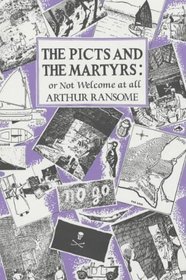
Book Review: The Picts and the Martyrs by Arthur Ransome (1943)
Dick and Dorothea have just arrived for a visit at Beckfoot with Nancy and Peggy when the unthinkable happens. Nancy and Peggy’s Great Aunt Maria turns up, determined to look after the Blackett girls while their mother is away. To avoid upsetting the Great Aunt, Dick and Dorothea hide themselves away in a nearby shed, calling themselves “picts” and keeping out of sight. In the meantime, Nancy implicates many adults in her plot to keep the visitors secret including Cook, the mailman, and Timothy.
The absence of the Swallows for the entire story was a disappointment for me in this book, as it is the second to last in the series, and I only have one more chance to spend any time with those characters. My personal feelings aside, though, I really appreciate that Ransome chose to explore a different dynamic in this story. I like the way he pairs the two quietest and least troublesome characters, Dick and Dorothea, with the wild, opinionated Amazon pirates, and forces them to conspire to keep a secret. I really enjoyed seeing how seriously Dick and Dorothea took their role as picts, and it made me laugh to see the usually mouthy Nancy behaving herself primly for the benefit of the great aunt. This book provides a lot of insight into the unlikely friendship between these two pairs of kids and gives Dick and Dorothea the opportunity to be something more than resident nerds.
There is less sailing in this book than in many of the others, which I also saw as a plus because it provides more room for character development. Since the reader spends most of the story with the D’s, these two characters come much more strongly to life than in other books where all the characters are present. The lack of a sailing-oriented plot also provides other opportunities for adventure, including a late-night break-in at Beckfoot and an all-out manhunt when the great aunt eventually goes missing. There were many wonderfully suspenseful moments that kept me on the edge of my seat as my husband read the book aloud to me, and many chapters where I groaned as I realized I’d be left waiting to find out what happened until the next day.
The Picts and the Martyrs ranks high on my list of favorites in the Swallows and Amazons series, right beside Winter Holiday. Though I will be sad to finish the series, I’m glad to have one more book to go - Great Northern?
The absence of the Swallows for the entire story was a disappointment for me in this book, as it is the second to last in the series, and I only have one more chance to spend any time with those characters. My personal feelings aside, though, I really appreciate that Ransome chose to explore a different dynamic in this story. I like the way he pairs the two quietest and least troublesome characters, Dick and Dorothea, with the wild, opinionated Amazon pirates, and forces them to conspire to keep a secret. I really enjoyed seeing how seriously Dick and Dorothea took their role as picts, and it made me laugh to see the usually mouthy Nancy behaving herself primly for the benefit of the great aunt. This book provides a lot of insight into the unlikely friendship between these two pairs of kids and gives Dick and Dorothea the opportunity to be something more than resident nerds.
There is less sailing in this book than in many of the others, which I also saw as a plus because it provides more room for character development. Since the reader spends most of the story with the D’s, these two characters come much more strongly to life than in other books where all the characters are present. The lack of a sailing-oriented plot also provides other opportunities for adventure, including a late-night break-in at Beckfoot and an all-out manhunt when the great aunt eventually goes missing. There were many wonderfully suspenseful moments that kept me on the edge of my seat as my husband read the book aloud to me, and many chapters where I groaned as I realized I’d be left waiting to find out what happened until the next day.
The Picts and the Martyrs ranks high on my list of favorites in the Swallows and Amazons series, right beside Winter Holiday. Though I will be sad to finish the series, I’m glad to have one more book to go - Great Northern?
Sunday, September 29, 2013
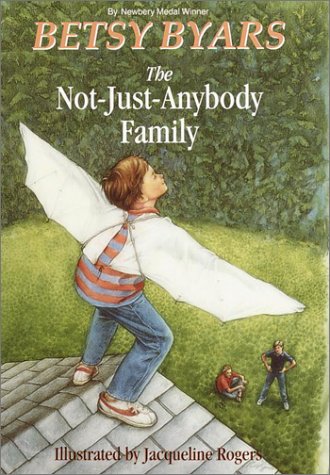
Book Review: The Not-Just Anybody Family by Betsy Byars (1986)
The Blossom kids know better than to hang around when the police show up, so when the cops come looking for their grandfather, Pap, both Maggie and Vern run off into the woods and hide. Unfortunately, Junior, their brother, is on the roof of the barn attempting to fly with cloth wings, and his getaway is thwarted when he falls and breaks both his legs. With their mom away with the rodeo, their dog, Mud, missing, Pap in jail and Junior in the hospital, Maggie and Vern are left to their own devices, and they must rely on their own ingenuity to bring everyone back together again, whatever it takes.
In this book, as she does in The Pinballs (1977), Betsy Byars explores the lives of realistic kids in a difficult, but entirely plausible, situation. She does not shy away from the negative emotions Maggie, Vern, and Junior each feel as things crash down around them, but she doesn’t allow them to wallow in negativity either. Rather, she focuses on the ways in which kids themselves can be empowered to make their own good fortune, and to fight against life’s problems by relying on each other. Readers will be delighted when Vern manages to break into jail, and they will be equally thrilled by Junior’s hospital roommate, Ralphie, whose spunky attitude and outrageous lies help him cope with the loss of his legs. Animal lovers, too, will be pleased to follow Mud as he, too, tries to track down his master and get back to the warmth and comfort of home.
The Not-Just-Anybody Family is a great family story about sticking together in times of trouble. Though some of the subject matter is quite serious, the kids’ adventures in jail, in the hospital, and in the courtroom provide a lot of laughs that make readers fall in love with the Blossoms and want to be a part of their family, however dysfunctional it might be. Kids who have quirky families of their own, or who are sick of sugary-sweet stories about typically happy families will get a kick out of this book, and will undoubtedly look forward to its four sequels: The Blossoms Meet the Vulture Lady, The Blossoms and the Green Phantom, A Blossom Promise, and Wanted… Mud Blossom.
In this book, as she does in The Pinballs (1977), Betsy Byars explores the lives of realistic kids in a difficult, but entirely plausible, situation. She does not shy away from the negative emotions Maggie, Vern, and Junior each feel as things crash down around them, but she doesn’t allow them to wallow in negativity either. Rather, she focuses on the ways in which kids themselves can be empowered to make their own good fortune, and to fight against life’s problems by relying on each other. Readers will be delighted when Vern manages to break into jail, and they will be equally thrilled by Junior’s hospital roommate, Ralphie, whose spunky attitude and outrageous lies help him cope with the loss of his legs. Animal lovers, too, will be pleased to follow Mud as he, too, tries to track down his master and get back to the warmth and comfort of home.
The Not-Just-Anybody Family is a great family story about sticking together in times of trouble. Though some of the subject matter is quite serious, the kids’ adventures in jail, in the hospital, and in the courtroom provide a lot of laughs that make readers fall in love with the Blossoms and want to be a part of their family, however dysfunctional it might be. Kids who have quirky families of their own, or who are sick of sugary-sweet stories about typically happy families will get a kick out of this book, and will undoubtedly look forward to its four sequels: The Blossoms Meet the Vulture Lady, The Blossoms and the Green Phantom, A Blossom Promise, and Wanted… Mud Blossom.
Monday, September 23, 2013
Book Review: The Year of Billy Miller by Kevin Henkes (2013)
Just before school starts, seven-year-old Billy Miller falls while he is on vacation with his family, giving himself a big lump on the head. Billy worries that now that he bumped his head, he might not be smart enough for second grade. As the year wears on, however, Billy proves himself more than capable, as he wins over his new teacher, helps his father reach a breakthrough with his art, attempts to stay up all night with his little sister, Sal, and writes and performs a poem celebrating his mom.
I have long admired Kevin Henkes for his range as an author. He writes successfully for all levels, from babies and toddlers right up to middle schoolers. I enjoy sharing his simple picture books like A Good Day and Birds in lap time and story time. Chrysanthemum is a favorite for school visits. His Penny books have been popular in my beginning reader story times, and they often disappear from the shelves the moment they are put back. Novels such as Words of Stone and Olive's Ocean demonstrate his deep understanding of the emotions of childhood and his mastery of the English language. The Year of Billy Miller combines all the best of Henkes's talents into what I believe is his best work to date.
The appeal of Billy Miller is that he is just a normal kid, living his normal day to day life. He doesn't have super powers. He's not a child prodigy, a kid detective, or even a troublemaker. He's a typical seven-year-old whose biggest problems involve getting off on the wrong foot with his teacher and wondering if it's babyish to call his parents "Mama" and "Papa." Each of the four sections of the book - called simply Teacher, Father, Sister, and Mother - explore events that take place either at home or at school, meaning that most of what happens to Billy could happen to any child of his age. Billy is a character whose universal experiences give him universal appeal, but at the same time, he is a very specific boy brought to life with very specific details.
There are so many lovely moments in this book that make Billy a memorable and sympathetic character. I love the scene where he picks up two red markers to use as devil horns to make a face at an annoying classmate and realizes too late that his teacher thinks he is making fun of the chopsticks in her hair. I love that he sits his parents down at one point to explain that he wants to start calling them "Mom" and "Dad" instead of "Mama" and "Papa" and that he finds that he must practice their new names to remember to use them. I also enjoy the fact that he uses the phrase "food baby" and that he makes up a new friend to play with his sister's stuffed whales when he tries to get her to stay up all night with him.
The Year of Billy Miller combines the precision of language of Henkes's novels with the emotional intelligence and character education of his picture books. Though it's not quite an early chapter book, as it is quite long and is not necessarily an easy read, it will appeal to kids in preschool and early elementary school, and it will be an ideal read-aloud for families and primary classrooms. This book is my favorite of this entire year, and I hope I'm not alone in thinking it might receive some Newbery recognition this Winter. The Year of Billy Miller is a must-buy for libraries, and a must-own for families who love distinctive and timeless children's books.
For a wonderful review of this book and a deeper explanation of why it's so great, read Betsy Bird's review over at Fuse 8.
I have long admired Kevin Henkes for his range as an author. He writes successfully for all levels, from babies and toddlers right up to middle schoolers. I enjoy sharing his simple picture books like A Good Day and Birds in lap time and story time. Chrysanthemum is a favorite for school visits. His Penny books have been popular in my beginning reader story times, and they often disappear from the shelves the moment they are put back. Novels such as Words of Stone and Olive's Ocean demonstrate his deep understanding of the emotions of childhood and his mastery of the English language. The Year of Billy Miller combines all the best of Henkes's talents into what I believe is his best work to date.
The appeal of Billy Miller is that he is just a normal kid, living his normal day to day life. He doesn't have super powers. He's not a child prodigy, a kid detective, or even a troublemaker. He's a typical seven-year-old whose biggest problems involve getting off on the wrong foot with his teacher and wondering if it's babyish to call his parents "Mama" and "Papa." Each of the four sections of the book - called simply Teacher, Father, Sister, and Mother - explore events that take place either at home or at school, meaning that most of what happens to Billy could happen to any child of his age. Billy is a character whose universal experiences give him universal appeal, but at the same time, he is a very specific boy brought to life with very specific details.
There are so many lovely moments in this book that make Billy a memorable and sympathetic character. I love the scene where he picks up two red markers to use as devil horns to make a face at an annoying classmate and realizes too late that his teacher thinks he is making fun of the chopsticks in her hair. I love that he sits his parents down at one point to explain that he wants to start calling them "Mom" and "Dad" instead of "Mama" and "Papa" and that he finds that he must practice their new names to remember to use them. I also enjoy the fact that he uses the phrase "food baby" and that he makes up a new friend to play with his sister's stuffed whales when he tries to get her to stay up all night with him.
The Year of Billy Miller combines the precision of language of Henkes's novels with the emotional intelligence and character education of his picture books. Though it's not quite an early chapter book, as it is quite long and is not necessarily an easy read, it will appeal to kids in preschool and early elementary school, and it will be an ideal read-aloud for families and primary classrooms. This book is my favorite of this entire year, and I hope I'm not alone in thinking it might receive some Newbery recognition this Winter. The Year of Billy Miller is a must-buy for libraries, and a must-own for families who love distinctive and timeless children's books.
For a wonderful review of this book and a deeper explanation of why it's so great, read Betsy Bird's review over at Fuse 8.
Sunday, September 22, 2013
Book Review: The Noonday Friends by Mary Stolz (1965)
Franny Davis is eleven years old, and though she loves her father, she is often frustrated by his lack of ambition. An artist at heart, Mr. Davis finds it difficult to hold down any one job for very long, which leaves the family with little money to spare and lots of financial worries. These concerns are compounded by the fact that not long ago, Mr. Davis experienced an illness, the treatment for which left his family deep in debt. Mrs. Davis must now work full time, and since the youngest child, Marshall, is only five, Franny and her twin brother Jimmy have to look after him each afternoon instead of spending time with their friends. Thankfully, Franny’s friend, Simone, understands Franny’s situation because it is similar to her own, and the two form a lunchtime friendship that helps each of them cope with the difficulties of their daily lives.
This book was originally published in 1965, and it received a Newbery Honor in 1966. The story is told primarily from Franny’s point of view, but occasional chapters visit other perspectives to broaden the reader’s understanding of the lives of both girls and their families. I really enjoyed Stolz’s writing style, which focuses mainly on the emotions of her characters, and on the development of their individual personalities. Among my favorite characters is Marshall, the youngest brother, whose dialogue sometimes sounds too mature for his age, but whose desire for a birthday celebration is universally relatable and provides the bulk of the story’s suspense. I also like the way Stolz encourages the reader to empathize with Franny’s dad, despite his bad habits. Though I was never completely happy with his actions, I could understand how he was torn between his passion and his need to support his family.
The Noonday Friends is a great realistic fiction novel for readers who enjoy episodic tales of family life. Because of the New York City setting, some parts of the story put me in mind of Johanna Hurwitz, who also writes a lot of great slice-of-life stories about city living. The subject matter also makes it a great read-alike for Ramona and her Father, which also focuses on the difficulties faced by a family when a parent loses a job. In our current economic crisis, the themes in this book are perfectly relevant, and because the writing focuses mostly on the characters and not on the larger culture, there are few references that date the book to the 1960s.
I don’t know how I managed to miss this book, especially since it is a Newbery Honor! I look forward to reading more from Mary Stolz, and to possibly revisiting a title of hers I do remember from childhood, The Bully of Barkham Street.
This book was originally published in 1965, and it received a Newbery Honor in 1966. The story is told primarily from Franny’s point of view, but occasional chapters visit other perspectives to broaden the reader’s understanding of the lives of both girls and their families. I really enjoyed Stolz’s writing style, which focuses mainly on the emotions of her characters, and on the development of their individual personalities. Among my favorite characters is Marshall, the youngest brother, whose dialogue sometimes sounds too mature for his age, but whose desire for a birthday celebration is universally relatable and provides the bulk of the story’s suspense. I also like the way Stolz encourages the reader to empathize with Franny’s dad, despite his bad habits. Though I was never completely happy with his actions, I could understand how he was torn between his passion and his need to support his family.
The Noonday Friends is a great realistic fiction novel for readers who enjoy episodic tales of family life. Because of the New York City setting, some parts of the story put me in mind of Johanna Hurwitz, who also writes a lot of great slice-of-life stories about city living. The subject matter also makes it a great read-alike for Ramona and her Father, which also focuses on the difficulties faced by a family when a parent loses a job. In our current economic crisis, the themes in this book are perfectly relevant, and because the writing focuses mostly on the characters and not on the larger culture, there are few references that date the book to the 1960s.
I don’t know how I managed to miss this book, especially since it is a Newbery Honor! I look forward to reading more from Mary Stolz, and to possibly revisiting a title of hers I do remember from childhood, The Bully of Barkham Street.
Subscribe to:
Posts (Atom)