Sunday, September 15, 2013

Book Review: The Pinballs by Betsy Byars (1977)

On the same day, three kids arrive at the same foster home: Thomas J. who has been raised by elderly twins after being abandoned by his birth mother, Harvey, whose own father ran over his legs with the family car, and Carlie, who has been removed from her home because of an abusive stepdad. Though they are supposedly just pinballs, existing together in one space without any particular regard for one another, these three kids form a bond that helps all three of them look hopefully toward the future.

I have known of this book for years because it was assigned reading in my own sixth grade language arts class, back in 1993, but the only thing that sounded at all familiar about it when I picked it up again was the name Thomas J. Otherwise, this may have been my first reading of the book. It was a much quicker and more engaging read than I remember. As I’ve mentioned before, I didn’t tolerate sadness very well as a kid, and knowing that kids were treated badly by their parents would have automatically kept me from investing myself too much in the story. As an adult, though, with lots more books under my belt, I can really appreciate the value of this book, and its continued relevance more than 35 years after its publication.

I think what makes this book stand the test of time more than anything else is its honesty about how the characters feel. As they settle into their new foster home, two of the characters cope by making lists about their lives. Harvey writes “Bad Things That Have Happened To Me” while Carlie starts one entitled “Big Events and How I Got Cheated Out of Them.” Carlie asks pointed questions of her foster mother, revealing her fears and confusion about why this woman wants her to live in her home. Harvey expresses real disappointment when he is promised Kentucky Fried Chicken and his foster father forgets to bring it home. Thomas J. worries about his inability to express love because the elderly twins who cared for him never really demonstrated their feelings. These anecdotes from the lives of the three foster kids are very real, and they help kids relate to the difficulties the characters face, even if they have never had the same experiences. There are some really dated pop culture expressions and references that might put off some contemporary readers, but beyond those are three well-developed characters with three-dimensional personalities and distinct identities.

This is the third book I have reviewed on this blog that depicts children in the foster care system. One for the Murphys describes an almost sugary-sweet situation in which a young girl slowly acclimates to her completely loving and perfect foster family. The Story of Tracy Beaker focuses on a more difficult little girl, who has been left at the children’s home for a long time, with little hope for a foster family to take her in. The Pinballs strikes a balance between these two more extreme scenarios and focuses on the friendships formed among the kids rather than their relationships to the adults who try to improve their lives. Though there are positive things to be said for all three books, I think The Pinballs is the one that is most likely to stick with me. For me, it’s the most real, and in some ways, the most hopeful, because it empowers the kids to take control of their own destiny and to focus on themselves instead of the adults who let them down.

I would recommend the The Pinballs to readers in grades 4 to 8 who prefer realistic fiction and character-driven stories, and who are ready to grapple with heavier issues.

Friday, September 13, 2013

Book Review: Kelsey Green, Reading Queen by Claudia Mills (2013)

Kelsey Green is great at reading. Her best friends are good at math and running. In this first of three books exploring each of the girls' special talents, Kelsey's class learns that they will be entering a school-wide reading competition, with prizes for the best readers in each class as well as the best class of readers in the entire school. Kelsey desperately wants to beat her class's other star reader, Simon, but she always seem to be a book or two behind, even when she reads the skinniest books she can find on her reading level. To make matters worse, the fifth grade's star readers are carrying their class ever-closer to first place. The only thing Kelsey can do now is try to motivate the reluctant readers in her class to read more books, even if it means being a little bit bossy in the process.

Claudia Mills consistently writes wonderfully relevant school stories at both the chapter book level and the middle grade level. In this story for the early elementary audience, she demonstrates her keen understanding of how children compete with one another, and how acutely aware kids are of reading levels, both their own and those of their classmates. Most elementary school students I know are at least slightly obsessed with reading levels, so for me, this book has its finger firmly on the pulse of what is happening right now. Since kids like to see themselves in the books they read, especially when they are just learning, this feeling that the story is happening right now is really important. I also think Mills does a nice job of creating a flawed character. Kelsey might be the reading queen, but she has a lot to learn about compassion, patience, and good sportsmanship, including how not to be a sore loser.

Interestingly, it's not completely clear from the story itself whether Kelsey herself learns a lesson, but I think the reader definitely does. Through Kelsey's behavior as she tries to teach her classmate, Cody, to love reading, kids learn how to be understanding of the differences between themselves and their classmates, and how to use their strengths to help others, not to show them up in front of everyone in order to be the best.

This book and its companions have a place in every elementary school classroom, and they might be especially useful in those where heavy competition among students of differing abilities has become a problem. Read-alikes for this series include the Polk Street School Kids books and the Clementine series.

Sunday, September 8, 2013

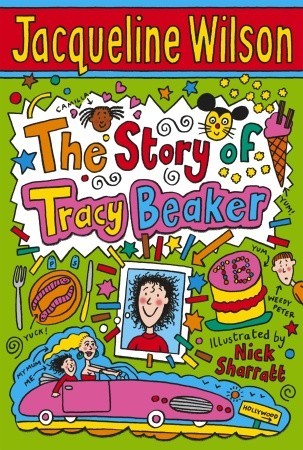
Book Review: The Story of Tracy Beaker by Jacqueline Wilson (1991)

Tracy Beaker lives in a children's home. She has had two failed attempts at making things work with a foster family, but because she is an older child and a bit unruly, she has had trouble making a long-term connection. When she begins writing her life story in a book given to her by the home, she discovers some writing talent, and even has the chance to meet a real-life author, but when it seems like she and the author might just hit it off, she finds that her behavior might keep her from truly enjoying this new friendship.

Tracy is the plucky kind of character kids love to read about, whether they have anything in common with her or not. She is smart-mouthed, funny, sarcastic, and authentic, and her difficult situation gives kids a lot of reasons to root for her right off the bat. She is not always a reliable narrator, but her lies and half-truths are always obvious to the reader, and I think the reader can easily understand that they arise from a desire to protect herself. Even her misbehavior – getting into fights, breaking others' belongings, having angry outbursts – is presented in a realistic way that presents things for what they are, without glorifying disobedience or immediately passing judgment on Tracy as a “bad” kid.

Though this book was originally published in the UK in 1991, it didn't make it to the United States until 2006. Though I suspect the publisher probably could have updated some things to bring the story up to date, there is no obvious evidence that this has been done in the US edition that I read. I recall no references to cell phones or other gadgets, and honestly, I'm not sure Tracy or her friends would realistically have those things even if this book were written today. Everything in the story felt very contemporary, and I think most middle grade readers would feel the same way.

Last year, when I reviewed One for the Murphys, I criticized it for its overly happy ending, which to me, felt forced and unrealistic. The Story of Tracy Beaker seems much more in tune with what a real-life foster care experience might be like, and I think anyone who reads One for the Murphys should read this book as well to ensure a more balanced look inside the lives of kids who are in the foster care system.

There are several other titles about Tracy Beaker, and though they don't seem to be available in the US, I'd definitely like to read them. They include: The Dare Game, Starring Tracy Beaker, Tracy Beaker's Thumping Heart, and Ask Tracy Beaker and Friends.

Sunday, August 25, 2013

Book Review: Just As Long As We're Together by Judy Blume (1986)

I don’t remember many first lines of books that I’ve read, but somehow I’ve never been able to forget “Stephanie is into hunks,” which is the first sentence of Judy Blume’s 1986 middle grade novel Just As Long As We’re Together. I’ve also never been able to forget that the “hunk” who hangs above Stephanie’s bed is a young Richard Gere, whom Stephanie has named Benjamin Moore after the paint brand. Throw in a supposed talking dog, an exercise video involving “gluts” and a ninth grader nicknamed Jeremy Dragon, and that is basically the complete picture of what I remember about this book from childhood.

Just As Long As We’re Together is the story of Stephanie Hirsch, a seventh grader, who has two best friends. Rachel has been her best friend pretty much all her life, and Alison is new in town. As their seventh grade year unfolds, Stephanie and her friends endure the usual growing pains, including questions over whether someone can have more than one best friend. Stephanie herself faces issues surrounding her weight, her period, her parents’ troubled marriage, her brother’s nightmares about nuclear war, and of course, boys.

I was a little nervous that this book wouldn’t hold up for me as an adult, but it turns out I had nothing to worry about. From that silly first line, I was hooked on Stephanie’s voice all over again, and I found myself eagerly zipping through each chapter. I was surprised by how little plot there really is, but not at all surprised that a character-driven story about friendship would be the one I would choose as a favorite. I like that the story drifts from episode to episode, slowly exploring every facet of Stephanie’s life. I like that things unfold organically, and that there doesn’t seem to be any real rush to finish the story or make an important point. Judy Blume has a talent for making the everyday seem interesting and for giving girls positive fictional role models for navigating early adolescence. I could relate completely to Stephanie, and to most of her experiences, and the fun of reading the book was really just getting to spend time with a character I really liked. It was like checking back in with an old friend after twenty years and finding she hasn’t changed a bit.

Just As Long As We’re Together is one of the tamer Blume novels, and I think it’s appropriate for girls as young as eight or nine. There is also a sequel, Here’s to You, Rachel Robinson, and both books have been combined into one volume entitled BFF, which has a much more updated cover than my old paperback edition. Despite some of the outdated references, I think the issues explored in this book are still relevant to today’s tween audience, and Blume can be trusted to handle them honestly and authentically.

Friday, August 23, 2013

Book Review: Lulu and the Cat in the Bag by Hilary McKay (2013)

Lulu might love her animals, but her grandmother, Nan, who is staying with Lulu and her cousin Mellie while their parents take a trip, does not feel the same way. When the girls find a bag on the front porch in which someone has left a marigold-colored cat, Nan is adamant that the cat must not come in the house. But Lulu can never abandon an animal in need, and she is sure that with a little time and persistence, she can convince Nan to love – and maybe even keep – the adorable stray.

The true testament to the quality of these books is that I, who am not an animal lover, keep coming back to them and loving them from beginning to end. I enjoyed watching Lulu's antics with her found duck egg in her classroom at school. I loved her relationship with the dog she found on the beach during vacation. And I am just as pleased by this story about the cat she finds at home, and how she comes to care for it.

It's not just the subject matter that makes this series a success – it is McKay's way of getting inside the mind of her main character and her talent for describing her characters' thoughts and interactions. I love her description of Nan as “”little and snappy and quick and kind” and the way she depicts the cat: “A glow-in-the-dark orange cat with eyes like lime-green sweets. Paws like beanbags. A tail like a fat feather duster.” These simple, yet beautiful, sentences stick with readers and paint clear pictures in their minds. McKay has mastered the important art of writing sentences beginning readers can decode without sacrificing the beauty of the language.

Lulu and the Cat in the Bag is another wonderful installment to the Lulu series that is sure to charm established fans and drum up some new ones. Recommend it to cat lovers, and to any little girl who wants to make a brand-new fictional friend.

Monday, August 12, 2013

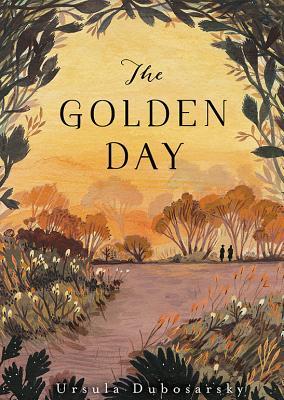
Book Review: The Golden Day by Ursula Dubosarsky (2013)

At a girls’ school in Sydney, Australia one beautiful afternoon in the late 1960s, a group of girls go with their teacher, Miss Renshaw, to the gardens, supposedly to write poems. While there, Miss Renshaw invites them to talk with the gardener, a conscientious objector named Morgan, who is himself a poet. Morgan leads the girls and Miss Renshaw into a nearby cave, supposedly to explore aboriginal paintings. The girls come out of the cave, but Miss Renshaw never reappears. Forever linked by their teacher’s disappearance, the eleven girls in Miss Renshaw’s class struggle to make sense of her fate, even years later when they finish their time at school.

There is no real way to capture the haunting beauty of this book in a simple synopsis. While the plot is significant, what makes this book remarkable is the beauty of the language and the author’s eerie, otherworldly tone. I was with the girls in every moment of the story. I could envision every moment, from their innocent gathering under the tree with Morgan, to the loss of one of the girls’ hats on the hike to the cave. Later, when they return to school, I felt as though I could hear the footsteps of teachers and administrators climbing the stairs to Miss Renshaw’s classroom. I could see their concerned faces, and feel the guilt the girls felt as they were torn between keeping a secret and helping to possibly save their teacher. The book took over all of my senses, and I felt like I was swimming in it, enjoying wave upon wave of its gorgeous prose and psychologically compelling storyline.

Adult readers might find that Miss Renshaw is similar in some ways to Miss Jean Brodie from the Muriel Spark novella and the film based on it. Indeed, I imagined Maggie Smith in the role of Miss Renshaw almost the entire time I was reading, and though the content of this story is not as mature, Miss Renshaw and Miss Brodie are both equally unsettling figures. I actually think The Golden Day is such a sophisticated novel that adults can enjoy it just as much as kids. Though the characters are roughly the equivalent of fourth graders for most of the story, I think the best audience for the book is actually slightly older. Middle school readers, especially, will be drawn to the creepy mood of the story, and the moral implications of Miss Renshaw’s behavior. I think this would be an interesting book to read aloud, or to discuss in book clubs. When I finished the book myself, I instantly wanted to know other readers’ opinions on it, and I suspect young readers will feel the same way - especially given the story’s unexpected and ambiguous conclusion.

The Golden Day is one of the best books I’ve read in 2013, and it’s likely to stick with me for a long time to come. Though it’s not eligible to win the Newbery because the author is not a U.S. resident, it is just as distinguished as any book that has won Newbery recognition, and I recommend it very highly to readers from grade 5 to adulthood.

Sunday, August 4, 2013

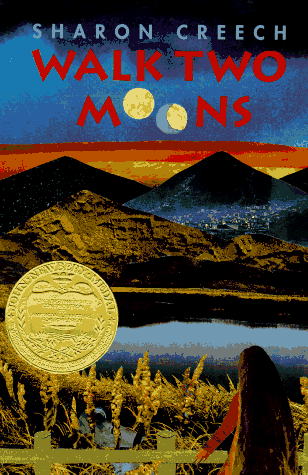
Book Review: Walk Two Moons by Sharon Creech (1994)

If you had asked me in 1995 (when I was 12) what my favorite book was, the answer most likely would have been Walk Two Moons by Sharon Creech. Though I think I only read it once, I remember just falling in love with it, and even now, it’s a book I identify as a favorite when kids ask me what books I loved as a kid. Surprisingly, despite my devotion to the book for nearly 20 years, when I sat down to think about it, I didn’t have very many memories of it at all. I remembered the main character’s name, Salamanca Tree Hiddle, and that she and her grandparents are on a road trip to find Salamanca’s mother, and that they call Sal their “chickabiddy,” but these are basically the only details my mind held onto. I’d forgotten that the road trip is only half the story, and that Salamanca actually narrates another story as she travels with her grandparents. The tale is that of her friend, Phoebe Winterbottom, Phoebe’s mother, and their involvement with an apparent lunatic.

Two things about this re-reading of a childhood favorite struck me right away:
  1. I didn’t enjoy the story itself as much.
  2. I appreciated the quality of the writing more.
There is a lot of metaphor at work in this book, which I understood much more easily as an experienced adult reader. While I remember liking the sentiment of not judging someone until “you’ve walked two moons in his moccasins,” I never realized the many ways Sal does just that throughout the book. Sal not only takes the same literal trip her mother took from Kentucky to Idaho, she also learns to feel empathy for Mrs. Cadaver, her father, her grandparents, Phoebe Winterbottom, and even Phoebe’s mother. I don’t think I could have articulated all of that as a seventh grader, even if I internalized it, and it impressed me how well Creech weaves together the various parts of this story. I especially liked the parallels between Sal’s mom leaving home and Phoebe’s mom leaving home.

The story itself also seems more predictable to me now, possibly because I read and analyze so many children’s books. I didn’t remember the details of the plot, but as each event unfolded, I could see where things were going. I also think I am just a more careful reader now than I ever was as a kid, because my child self was shocked to learn that Sal’s mother is dead, but my adult self picked it up early on, the first time Sal says her mother is “resting peacefully.” I can’t tell whether the author intends for the reader to know this information early in the story or not - but it was interesting how obvious it was to me now and how clueless I was back then.

Re-reading this book was kind of a personal let-down because the story didn’t inspire the same strong sense of excitement I remember from back in the 90s, but without regard for my nostalgia, I think the story still holds up very well. As Newbery winners go, it’s one of the more readable stories, and I think kids are still drawn to this book - and Creech’s writing in general - even as we approach the 20-year mark since Walk Two Moons was first published.I doubt this is a book I’ll feel any need to revisit again, but I’m glad to have a new perspective on what was once my favorite book in the world.