Sunday, July 28, 2013

Book Review: The View from the Cherry Tree by Willo Davis Roberts (1975)

Rob's older sister, Darcy, is getting married, and everyone in the household is caught up in the preparations. Wanting to stay out of the way, Rob climbs into the cherry tree between his house and the house of the lady next door, Mrs. Calloway. While there, he overhears Mrs. Calloway talking with a man, and the next thing he knows, she's been pushed out the window and sent to her death! Rob is absolutely sure of what he has seen, but when he reports the dead body to his family, everyone believes he is inventing the murder story to make things more interesting. The police then declare the death accidental. But the killer knows that Rob speaks the truth about what he has witnessed, and now Rob's life is in danger, too!

I am pretty sure I read this book as a kid, because the title and author have both stuck with me for a long time, but reading it this summer felt a lot like reading it for the first time. I think some of the memories I might have associated with this story are actually of another book by Willo Davis Roberts, Babysitting is a Dangerous Job, because there was almost nothing at all familiar about this book, even though I kept expecting to recognize something. At some point, I will need to read the other one to see if it sparks anymore memories.

While I remember this as being a highly suspenseful book with a great twist at the end, it isn't really. For an adult reader who is familiar with the mystery genre, this story is actually fairly straightforward, and it isn't difficult to predict who the killer will turn out to be. Because the story is told in the third person, the reader never fully experiences Rob's fear as he is shot at and nearly poisoned. The situations that unfold once the killer starts trying to attack Rob are scary, but the reader is distanced from the main action because he watches it from the outside. I imagine the reason for this distance might be a desire to protect young readers from getting too upset by the story, but for me, it took away from the overall drama of the book.

Willo Davis Roberts was a household name for my sister and me during the brief window of time when we both read middle grade books, and I'm pleased to see that many of her books are still in print and still available in my local libraries. That said, without any particular sense of nostalgia associated with it, this book fell flat for me, and I was a bit disappointed that I didn't have the feeling of satisfaction at the end that I so clearly remember from childhood.

Monday, July 22, 2013

Book Review: After Iris by Natasha Farrant (2013)

Three years ago this December, Blue's twin sister, Iris, died in an accident, and nothing has been the same since. Blue's parents pack their work schedules with lots of international travel so that they don't have to be home. Flora, Blue's older sister, has developed a flair for the dramatic, complete with colorful hair dyes and a new boyfriend. The younger siblings, Jas and Twig, like their new Bosnian au pair, Zoran, but they find him an unacceptable replacement for the constant presence of their mom and dad. And Blue has become a shadow, hiding behind her video camera and observing the world, but rarely engaging with her classmates, or the friends who knew her when Iris was alive. Something has to change, and everyone knows it, but who will make the first move?

When I first heard about this book, I was drawn to it, but also wary. I tend to avoid "death books" because they often upset me far more than they should, causing me to lose sleep and feel generally uncomfortable for a long time after I finish them. I was worried that this book would take place quite literally "after Iris," thinking that perhaps the story might even begin with her death. My expectations, as it turns out, were quite shortsighted, and what I found in this book was not morbid despair, but a hopeful optimism, as Blue and her family slowly learn how to move forward with their lives without forgetting the person they loved and lost.

This is a beautifully written middle grade debut, which stands out because of its unique writing style, its quirky characters, and its focus not just on losing a sibling, but on coming together as a family. The chapters alternate between Blue's video diary, which includes transcripts of various moments she has caught on film, and her written commentary on her family, friends, and school life. Blue is a quiet, introspective character, but her subdued personality is complemented wonderfully by the big personalities of the rest of the kids in her family. Though the main plot is always about Blue trying to integrate back into her life in the absence of her twin, subplots about a community theater production, Zoran's own troubled past, and the younger siblings' rats provide action, drama and humor where otherwise Blue herself is very passive.

The family in the story - as well as the author herself- are British, and at least partly because of that, this book kept reminding me of Hilary McKay's novels about the Casson family. The only Casson story I've read myself is Saffy's Angel, in which Saffy learns she is adopted, and I noticed a lot of similarities between Saffy and Blue, from their clueless parents to their own pain and isolation. The relationship between Blue and Flora is also reminiscent of the sisterly relationship among the girls in the Sisters Club books. The blurb on Goodreads also draws comparisons between After Iris and The Penderwicks, but I'm not sure Penderwicks readers, who are used to light neighborhood adventures, would necessarily be drawn to this deeper story about love, loss, and moving on.

All in all, though it is difficult to describe this quiet novel, it is definitely worth reading and sharing with sophisticated readers of middle grade realistic fiction in grades 4 to 8.

Sunday, July 14, 2013

Book Review: Dear Mr. Henshaw by Beverly Cleary (1983)

When I first decided I would spend my summer re-reading books I originally read in childhood Dear Mr. Henshaw was one of the first titles I thought of. I know that I read it, because I think I read almost every Beverly Cleary book my library had on its shelves when I was a kid, but I doubt I was much older than 8 when I last looked at it, and my memories were very, very vague. All I knew for sure was that the main character’s name is Leigh, his parents are divorced, and his favorite author is a man named Mr. Henshaw, to whom he writes letters. But it turns out that there is quite a bit more to the story than that!

Leigh begins writing to Mr. Henshaw in second grade after he does a book report about one of his books. Leigh proceeds to use the same book for repeated assignments as he rises from grades two to six, and he continues writing to Mr. Henshaw, both to ask him interview questions for his book reports, and to share things about his own life. After a while, Leigh realizes it might make more sense to keep a diary instead of mailing letters to Mr. Henshaw all the time, and it is here that he records the details of the events in his life, such as a classmate routinely stealing from his lunchbox, and his struggle to cope with his truck driver dad’s long absences.

I have always loved Beverly Cleary, but I have a newfound respect for her skills as a writer after reading this, her sole Newbery medal winner. I am so used to associating her with the Ramona books that I expected this book to have a similar tone and style. It surprised me to realize how different Leigh is from Ramona, in terms of personality, life experiences, and even sense of humor. Dear Mr. Henshaw takes place in a totally different world from the adventures on Klickitat Street, and it showcases Cleary’s ability to tell different types of stories about all different types of kids.

In addition to speaking truthfully to the issues facing a child of divorced parents where one parent is often far away, Cleary also provides a great literary hero for the bookish boys of the world who love books and aspire to write themselves. By creating such a believable main character with all the concerns of a real eleven-year-old boy and giving that boy an interest in reading she promotes reading to a traditionally reluctant population without alienating or lecturing them.

As a kid, it bothered me that Mr. Henshaw’s letters were not part of this book, and that we never really get to know the author who has so enchanted Leigh. As an adult, that didn’t bother me at all, and I actually appreciated that Mr. Henshaw is never given a chance to either upstage Leigh, or to disappoint the reader by not living up to the hype Leigh creates surrounding him. I do like that Leigh eventually meets an author who knows Mr. Henshaw, because that gave us a little glimmer of what the man must be like, but I really think it would have ruined the story to have Mr. Henshaw himself actually appear. I felt much better seeing Leigh’s dad make an appearance instead.

Dear Mr. Henshaw is a natural read-alike for so many popular books these days. Leigh Botts kept a diary long before Greg Heffley, Big Nate, and Nikki Maxwell made it cool, and in my opinion, his is still the best. If you haven’t read Dear Mr. Henshaw since childhood, I highly recommend revisiting it. And don’t forget to share it with the kids in your life, too!

Monday, July 1, 2013

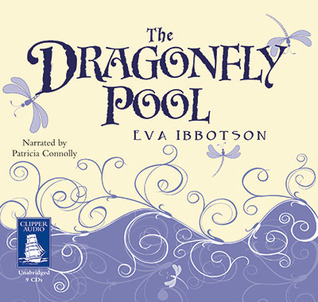
Reading Through History: The Dragonfly Pool by Eva Ibbotson (2008)

With World War II about to begin, Tally Hamilton, a doctor’s daughter, leaves her home in London to attend Delderton Hall, a progressive boarding school in the British countryside. While there, she becomes aware of the brave king of a small nation called Bergania, who has refused to give in to Hitler’s demands, and of his young son, Prince Karil. When Tally and some of her classmates are later invited to a folk dancing festival in Bergania, she devises a plan for them to be able to participate so that she might have the chance of experiencing this country firsthand. Unexpected circumstances lead to her actually meeting the prince himself, and when the king is assassinated, Tally finds that she and her friends might be Karil’s only chance to escape from the Nazis and avoid being sent to prison.

This middle grade novel truly offers something for everyone. It is part school story and part adventure, filled with both the daily activities of British schoolchildren and moments of true danger and suspense. The writing is beautifully descriptive, and each of the characters, no matter how minor, has a fully developed personality and backstory that in some way contributes to the larger picture. The adult characters are just as interesting as the kids, and the relationships Tally develops with her teachers are some of my favorites of the entire book. Though Bergania is not a real country, it comes perfectly to life in Ibbotson’s details. I especially enjoyed the significance of The Dragonfly Pool, the secret respite for which the book is named, which is visited by several of the characters in times of emotional distress at various points throughout the book.

Though this not a fantasy novel, I couldn’t help but compare it to the Harry Potter series. The boarding school environment obviously made me think of Hogwarts, and many of the teachers easily matched up with Harry Potter counterparts. The secrecy and urgency surrounding Karil’s escape from Nazi-occupied Bergania remind me of the efforts of Harry’s friends to protect him from Voldemort. Even Karil’s time spent in his grandfather’s house had the same suffocating and desperate feeling as Harry’s summers on Privet Drive. Though The Dragonfly Pool lacks the magical elements of Harry Potter, I still think it is an excellent read-alike for the series, and one that might be overlooked by kids without a bit of a booktalk from an adult.

The Dragonfly Pool is one of my favorites of all the books I’ve read so far this year, and I’m looking forward to reading more from Eva Ibbotson. I also loved the voice of the audiobook narrator, Patricia Conelly, and I would highly recommend listening to this book just to hear the way she reads it. The story is great, but the combination of the great writing and Conelly’s perfect performance make the audiobook an absolute treat.

Sunday, June 23, 2013

Book Review: How to Eat Fried Worms by Thomas Rockwell (1973)

Now that summer is officially here, it's time to introduce my summer reading project. Over the past few months, I have repeatedly come across books I remember from childhood that I have either never re-read, or haven’t re-read in a number of years. I decided that since there were so many, I would devote my summer Old School Sunday posts to re-reading these books, in what I am calling my Summer Re-Reading Program. This week, I am also starting my new schedule for the Dig Into Reading summer reading program at my library, so my reviews today, Monday, Wednesday, and Friday will all focus on that theme. Therefore, the first book I re-read was How to Eat Fried Worms.

I remember How to Eat Fried Worms as a book that was assigned to me in early elementary school. I can’t remember many of the details, but I have a feeling the assignment was from my beloved third grade teacher, who remains my favorite teacher of all time. If I am right about the timeline, it has been roughly 22 years since the last time I read this book. Basically, all I remembered when I brought the book home from the library is that some kids dare each other to eat worms, and that somewhere in the story, there is a bad word. As it turns out, my summary wasn’t far off, just lacking in details.

The main character of the book is Billy, who is dared by some boys in the neighborhood to eat 15 worms in as many days. If he succeeds, he wins 50 dollars, and if he loses, he has to fork over 50 dollars to his buddies. The rules of the bet are that the other boys get to choose the worms, but that Billy gets to choose how they are prepared, and what condiments are used to mask the taste. When it starts to look like Billy might actually achieve his goal, the other boys start trying to sneakily break the rules so they won’t have to come up with the money to satisfy the bet.

This book is very short, as are the chapters, and much of the story is told in dialogue amongst the boys as they set forth the terms of the bet, and then begin to serve Billy the worms. The bet is really the sole focus of the book, and the only subplots in the story relate directly to Billy’s difficulties in completing the challenge. Even so, despite the limited glimpses we have into the lives of the characters, each of them - even some of the parents - comes fully to life through his or her reactions to the bet and the way they each speak and behave. There is very little exposition - rather, everything is revealed slowly, one step at a time, as each worm is eaten.

As I mentioned, there is one instance of foul language ("bastard"), but it’s said in a moment of real anger, and I don’t think it bothered me much as a kid. I think I remember the aforementioned teacher taking some time to talk about using that word, but even the details of that situation are mostly fuzzy inmy memory at this point. I imagine the use of this word is why this book has been challenged in some places, but I don’t think it’s that big a deal within the context of the larger story. I suppose adults reading it aloud could just change that word if it was that much of a problem, but I think most kids would understand not to go around calling people bastards, in the same way that most kids I know would not eat a worm, no matter how much money was on the line.

Though it has been years, everything from the illustrations (by Emily Arnold McCully) to the layout of the book and the chapter titles felt really comforting to me, like visiting an old friend or wrapping up in a favorite blanket. I didn’t have many moments where I remembered a specific line or scene, but I had a strong sense of nostalgia as I read and a definite sense of recognition that I had been this way before. Though How to Eat Fried Worms is now 40 years old, there is very little that should keep contemporary kids from reading it. Boys will always be fascinated by eating disgusting things, and all kids love to read about bets and squabbles among kids their own age. How to Eat Fried Worms will be on prominent display in my library throughout this summer’s Dig Into Reading program, and I hope a whole new generation of readers will create their own deeply ingrained memories associated with the story.

Monday, June 17, 2013

Book Review: Zero Tolerance by Claudia Mills (2013)

A model student, Sierra Shepard is the least likely seventh grader to be expelled for bringing a knife to school. Unfortunately, one day, she grabs her mother’s lunch instead of her own, and her mother has packed a knife in her lunch bag, planning to use it to cut an apple. Ever the conscientious citizen, Sierra turns the knife into the school office immediately upon discovering it, assuming it will be understood that she made an honest mistake. The principal, however, is not understanding. Rather, he cites the school’s zero tolerance policy, and sends Sierra to in-school suspension pending a hearing. For the first time in her life, Sierra is treated like a criminal, and though her father is ready to shame her principal into letting her off the hook, she is less certain that she shouldn’t be punished- or that she even wants to remain in a school that treats her so harshly.

Claudia Mills has written many school stories, but none is so timely as this 21st century tale. There are often reports on the news about kids bringing weapons to school, and also occasionally about kids who are wrongly accused or wrongfully punished for breaking a school’s zero tolerance policy. This book’s earnest main character takes readers inside such a sticky situation and gives them a firsthand look at the complications and consequences of applying a zero tolerance policy to every situation. Readers also have the opportunity to watch the way Sierra reacts to her new surroundings, where the other kids truly misbehave. Not only is this the story of a girl wrongfully accused, it is also the story of how this same girl’s eyes are opened to a segment of her school’s population which she has previously ignored, and how this experience broadens her horizons.

Zero Tolerance is a book I could easily sell to fans of Andrew Clements, especially those readers who have enjoyed Troublemaker and The Landry News. The issues presented in the story make it a logical choice for book groups or for classroom discussions, not just about the concept of zero tolerance, but also about misbehavior and what it means to be “good” or “bad.” It’s also a great example of a book with flawed but believably realistic adult characters. Girls and boys alike who appreciate issue-driven middle school stories won’t be disappointed by Claudia Mills’s latest project, and those who have grown up reading her books for slightly younger readers will be glad to have this new, more mature title on their shelves.

Sunday, June 9, 2013

Book Review: Return to Gone-Away by Elizabeth Enright (1961)

Return to Gone-Away is Elizabeth Enright’s sequel to her 1958 Newbery Honor Book, Gone-Away Lake. The second book follows the adventures of Portia and her family as they work to restore an abandoned house at Gone-Away Lake so they can spend the summers there. As they uncover the treasures and skeletons hidden in the closets of their new home, Portia and Foster spend time with their cousin Julian and their elderly friends, Uncle Pindar and Aunt Minnehaha, who indulge the children’s interest in history, as well as their imaginations.

Though this sequel is nearly as well-written as the first book, I didn’t see much of anything new in this story that made me understand why a sequel was necessary. Though I could see readers being interested in the mysteries of an abandoned house, Portia and the other characters already had the experience of exploring Gone-Away in the first book, and this story just seemed like more of the same. I kept waiting for whatever the new twist was going to be, but it never quite happened.

I also had trouble buying into the idea that kids are overly interested in learning about what older people were like as children. I think readers like the kind of stories Uncle Pindar tells about his boyhood, but the structure of this book distances the readers from those adventures by telling about them in the voice of an adult. I think this would be a much better children’s book if it stuck more to the children’s point of view. It might have been interesting to either have Pin and Minnie tell their own stories in their own book where they appear as children, or to have the book alternate back and forth between the present and the past. Everything that happens in the story is interesting, but sometimes the interesting stuff is obscured by the way it is delivered. I also think Pindar and Minnehaha are kind of creepy. I think we’re supposed to see their love for the past as charming, but to me, it just looked sad. I continued to think of Miss Havisham, who is the fictional picture of emotionally instability, and certainly not someone I’d let kids hang out with unsupervised!

All in all, unless Gone-Away Lake is your favorite book of all time, there’s no real reason to also read the sequel. Nostalgic adults might find it charming, but I was pretty bored, and I think most kids I know would choose to put this book aside in favor of something with a bit more action, or at least a bit more of a kid-friendly approach to storytelling.